Discreet hearing aids: what size and weight really change
Phonak research · 16 September 2026 · 6 min read

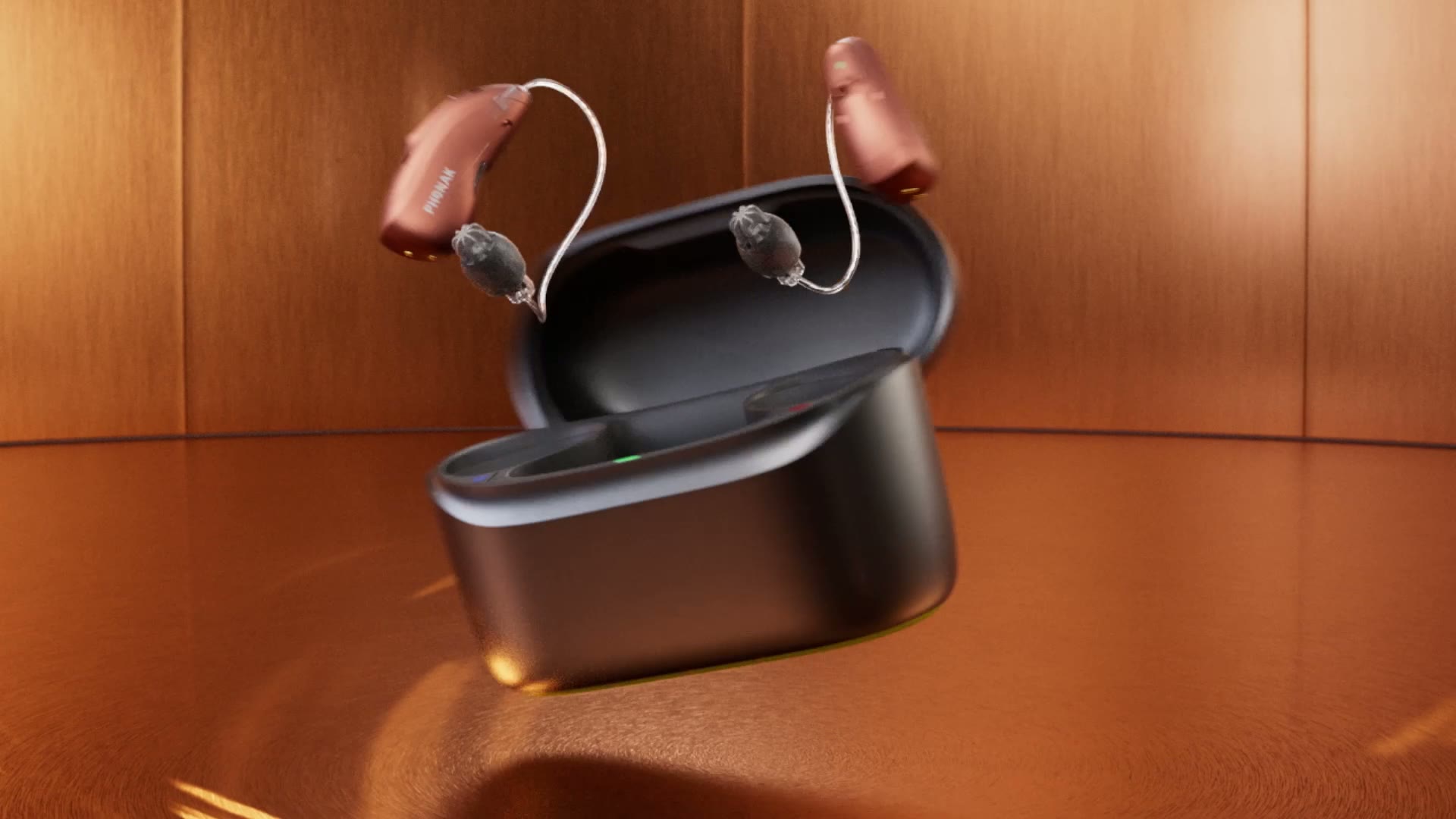
For many people, the first question is not “will I hear better?” but “will it show?”. It is a fair question, and it deserves a precise answer rather than a slogan. Manufacturers talk about a “sleek, discreet” design; for its Audéo EON Sphere, Phonak announces a housing that is “25% smaller and 20% lighter”. What are those figures worth, and what do they change for you?
25% smaller, 20% lighter: compared with what?
Both percentages describe the device housing, the part that sits behind the ear. They are compared with a single reference point: Phonak’s previous Sphere generation. They are not comparisons with other hearing aids on the market, nor with in-the-ear devices, nor with the Audéo EON R, which in fact shares exactly the same housing.
You also need to know the starting point. The previous Sphere was a noticeably bulkier device than the average receiver-in-canal hearing aid. A 25% reduction brings it back towards the norm of that category; it does not make it the smallest hearing aid in existence. For many people, that is precisely what matters: they wanted its performance in noise but found the device too conspicuous. This generation removes most of that trade-off.
Why artificial intelligence required a big housing
The first Sphere generation had solved a real problem, understanding speech in noise, thanks to a second processor dedicated to artificial intelligence. But that processor used a lot of power. It therefore needed a bigger battery, and a bigger battery means a bigger, heavier housing. That was the main criticism of that generation.
For the EON generation, Phonak announces a speech-in-noise feature that uses 37% less energy. The manufacturer chose to invest that gain in miniaturisation rather than in record runtime: a smaller battery, fewer components, a reduced housing, and an advertised runtime in the same range. We explain what that chip delivers in our article on the Phonak study and speech understanding in noise.
What it changes behind the ear
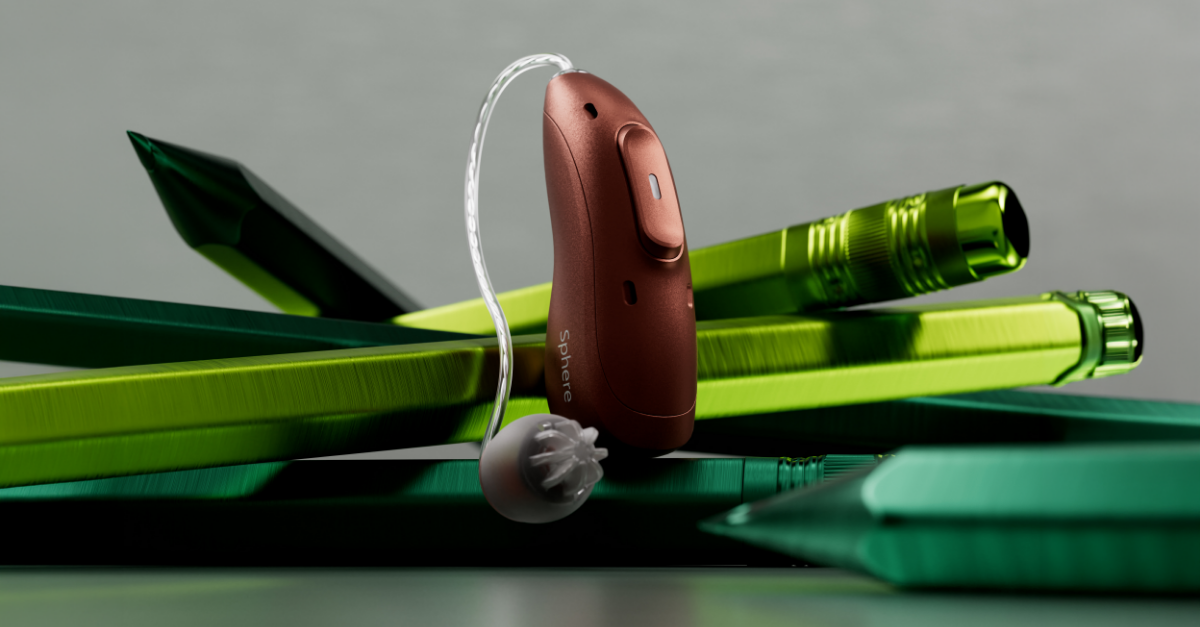
What shows, on a receiver-in-canal device, is the housing behind the ear and the thin wire running down to the canal. The receiver itself, seated in the ear canal, and the silicone dome that holds it do not change from one generation to the next; they are already invisible.
The reduction therefore concerns the visible part. Three factors then decide how discreet the device really is: its colour relative to your hair and skin (that is what the colour range is for), your hairstyle, and your glasses, whose arms share the space behind the ear. A slimmer housing is easier to fit next to a glasses arm; that is a concrete benefit for glasses wearers, even more than looks.
Weight affects comfort rather than discretion. Twenty percent less on a device that weighs a few grams is felt less than you might imagine on a scale, but it is felt at the end of the day, when the sensation of something sitting behind the ear fades away.
Discreet, very discreet, invisible: the three options
The receiver-in-canal device, such as the Audéo EON Sphere, is today’s common format. It is discreet without being invisible, and it is the format that offers more features: connection to the phone and the television, rechargeability, and for the Sphere, the artificial intelligence processor.
The custom in-the-ear device, such as the Virto R Infinio, is moulded on an impression of your ear and sits in the concha, with nothing behind the ear. It is the choice of those who cannot tolerate behind-the-ear devices or wear glasses, with greater discretion, but without the second processor of the Sphere models.
The invisible device, such as the Lyric, is placed deep in the ear canal by a specialist and worn continuously for several months. Nobody sees it. In return, it gives up connectivity and advanced noise processing, and not every ear anatomy is suitable.
The general rule is simple: the smaller and more hidden the device, the less battery, connectivity and computing power it can carry. Discretion is therefore chosen according to what you expect from the device, not only according to what you want to hide.
Comfort is personal
“Comfortable all day” is a marketing conclusion, not a measurement. No wearing-comfort study has been published on this generation. Comfort depends on the anatomy of your ear, your glasses, your hairstyle, and the quality of the fitting by your hearing care professional, who chooses the dome, the wire length and the settings.
How to decide
Unlike performance percentages in noise, size and weight can be checked without a laboratory: in the hand, then behind the ear, in front of a mirror. Our centres in Morges and Vevey let you handle the devices, and the free three-week trial lets you judge discretion and comfort in your own life, not in a display case. Book an appointment and bring your glasses.
What Phonak says exactly, and the limits
The “25% smaller” and “20% lighter” figures are manufacturer-stated measurements, compared with the previous Sphere generation, which was notably larger than average. They concern the housing only; the receiver and dome are essentially unchanged. The “all day” comfort claim has not been the subject of a published study. Exact dimensions and weight are listed in the official datasheet. Independent hands-on reviews to date confirm a clearly noticeable size difference, while noting that the reduction applies to the Sphere model line.
Sources
Sonova AG (24 August 2026). New EON hearing aid portfolio strengthens Phonak’s leadership in speech understanding, scene intelligence and Made-For-All connectivity. Press release, Stäfa. States that EON is 25% smaller and 20% lighter than the previous Sphere generation, without compromising all-day wearability.
Phonak / Sonova AG (2026). Phonak EON: Adaptive Clarity, Universal Connectivity, accessed September 2026. Presents the smaller, sleeker design as enabled by the new chip’s power efficiency, footnoted as a comparison with the previous Sphere generation.
HearingTracker (August to September 2026). “Phonak Eon Debuts Smaller Sphere, Auracast, and WindBlock” and “Phonak Audéo Eon Review”, hearingtracker.com. Reports the size reduction as addressing the previous Sphere’s main trade-off, with first-look audiologist reactions.